GUTTER SYSTEMS
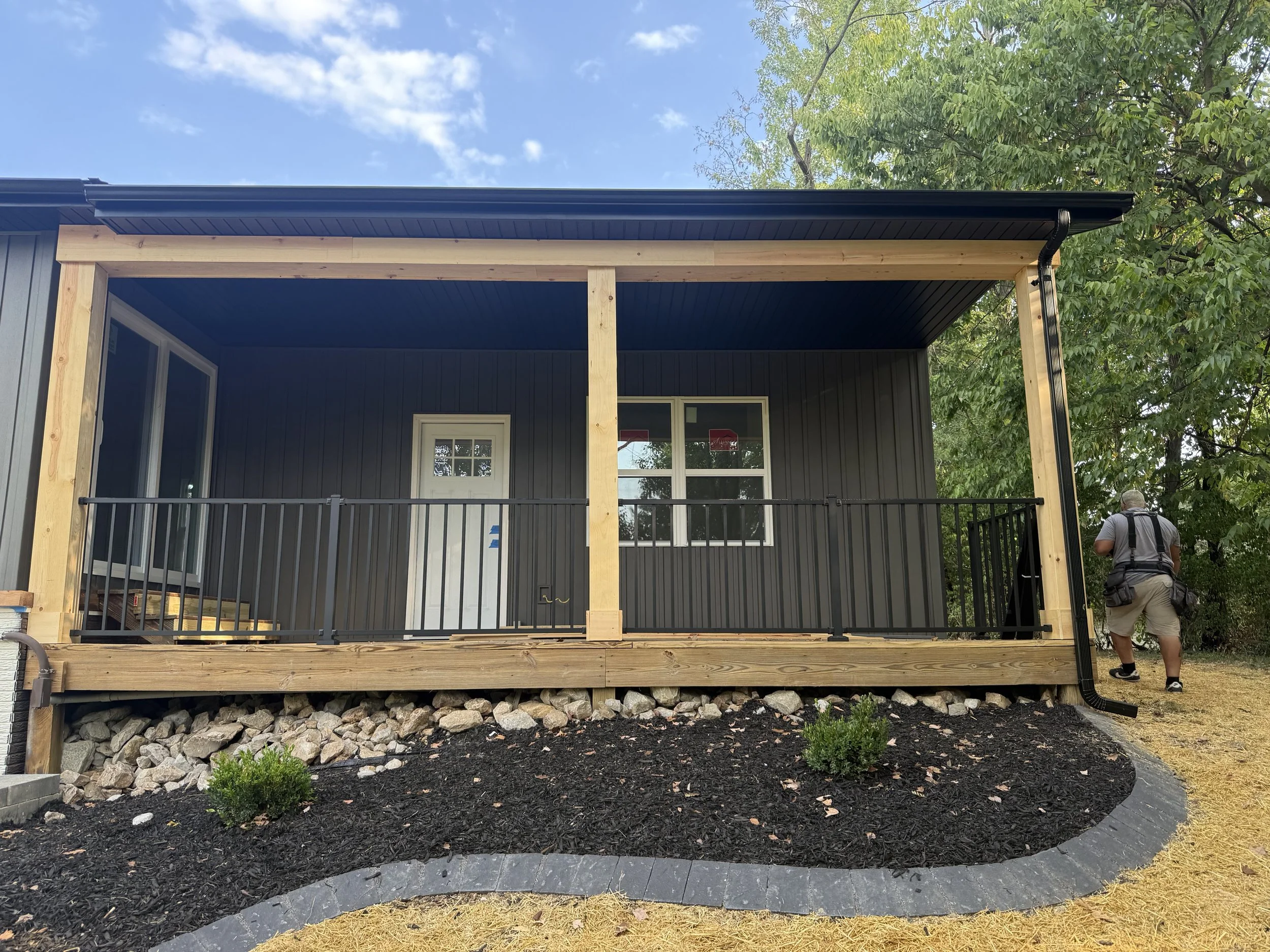
Control the Water.
Protect the Property.
A gutter system is more than aluminum at the roof edge. It collects roof runoff, routes water through properly positioned downspouts, and directs it toward an appropriate discharge area—helping manage water around the property as a complete system.
K-Style / Round / Copper / Gutter Protection
Built Tough. Built Ironclad.
Water Has to Go Somewhere.
A properly planned gutter system manages roof runoff from the roof edge to the point of discharge. Gutters, downspouts, pitch and drainage all work together to move water in a controlled direction around the property.
Foundation Areas
Gutters and downspouts help control where roof runoff reaches the ground, allowing water to be directed toward an appropriate discharge area rather than simply collecting along the structure.
Siding & Exterior Walls
Controlled runoff helps reduce repeated water exposure and splashback along siding, trim and other exterior surfaces below the roofline.
Fascia, Soffit & Roof Edge
Secure attachment, proper pitch and functioning drainage help the gutter system manage water at the roof edge instead of allowing overflow or unwanted water movement around adjacent exterior components.
Landscaping
Concentrated roof runoff can affect soil, mulch and planting areas. Downspout placement and discharge planning help manage where that water is released.
Entries & Walkways
Gutter and downspout configuration can help keep roof runoff from being unnecessarily directed toward doors, steps, walkways and other frequently used areas.
Property Drainage
The gutter does not end the water-management job. Where downspouts discharge—and how that water moves from there—should be considered as part of the overall system.
THE SYSTEM APPROACH
The goal isn't simply to catch water. It's to collect roof runoff, move it through the gutter and downspout system, and discharge it appropriately for the property.
More Than
Just a Gutter.
A gutter system is a connected set of components designed to collect roof runoff, move it along the roof edge, route it downward and direct it toward the intended discharge area.
Gutters
The primary channel positioned along the roof edge to collect runoff and move water toward designated outlet locations.
Outlets
Transition points that allow collected water to leave the gutter and enter the downspout system.
Downspouts
Vertical components that carry water from the gutter toward ground-level drainage or the selected discharge area.
Elbows
Directional fittings used to transition the downspout around the structure and help route water toward the intended path.
Hangers
Attachment components that secure the gutter along the roof edge and support the system in its installed position.
End Caps
Components installed at open gutter ends to close the channel and keep collected water within the intended system.
Miters / Corners
Connections that allow gutter runs to transition around roofline corners while maintaining the intended path for water.
Discharge
The point where water exits the downspout system. Its location and direction are important parts of overall drainage planning.
Gutter Protection
Protection systems can reduce the amount of debris entering the gutter and help reduce routine cleanout demands when appropriate for the project.
SYSTEM PERFORMANCE
Profile, pitch, attachment, outlets, downspouts and discharge all matter. The system works as a whole.
Know What
to Look For.
Gutter problems do not always mean the entire system needs to be replaced. The condition of the gutter, attachment, pitch, connections, downspouts and drainage should be evaluated together to determine what the project actually requires.
Leaks at Connections
Water leaking from joints, corners, miters or other connections can indicate a failed seal, movement, damage or another issue that should be evaluated.
Sagging or Pulling Away
Gutters that sag, shift or pull away from the roof edge may have attachment, hanger, structural or load-related issues affecting the installed system.
Overflow
Water spilling over the gutter edge may be related to debris, drainage restrictions, outlet or downspout configuration, pitch, system condition or other project-specific factors.
Poor Pitch
Gutters need an appropriate path toward their outlets. Sections that hold standing water or drain poorly may warrant evaluation of the gutter's position and pitch.
Loose or Damaged Downspouts
Disconnected, damaged or poorly positioned downspouts can interfere with the system's ability to move collected water toward its intended discharge area.
Water Behind the Gutter
Water appearing behind the gutter or along the roof edge can indicate an installation, attachment, flashing, drainage or adjacent exterior issue that should be inspected.
Fascia Deterioration
Visible deterioration around the gutter line may involve the fascia or other roof-edge components. The surrounding condition should be understood before new gutter work is planned.
Inadequate Discharge
Even a functioning gutter can leave a drainage problem if downspouts release water in an unsuitable location. Discharge is part of the complete water-management system.
Storm Damage
Wind, falling debris and severe weather can damage gutters, downspouts, attachments or related exterior components. The affected area should be evaluated based on the actual damage present.
REPAIR OR REPLACE?
Not every gutter problem requires a complete replacement.
The appropriate scope depends on what is actually causing the problem, the condition of the existing system and adjacent components, and whether the current configuration can still perform as intended.

Less Debris.
More Control.
GUTTER PROTECTION
Gutter guards are designed to reduce the amount of leaves and other debris entering the gutter while allowing roof runoff to move into the system. For the right property, gutter protection can reduce routine cleanout demands and help keep the gutter system easier to maintain.
MAINTENANCE MATTERS
Gutter guards are not maintenance-free.
Debris can still collect on or around a protection system, and gutters, downspouts and discharge areas should still be checked and maintained as conditions require.
Planned From
Start to Finish.
A gutter project involves more than installing material along the roof edge. We look at the existing conditions, roofline, measurements, drainage path and installation requirements before the system is completed and reviewed.
Evaluate
We review the roofline, existing gutter conditions, fascia areas, downspout locations and how water currently moves around the property.
Measure & Plan
Measurements are taken and the gutter runs, system configuration, downspout placement, drainage direction and project-specific details are planned.
Build / Prepare
Materials and components are prepared for the project, and the work area and relevant roof-edge conditions are readied for installation.
Install
Gutters, outlets, downspouts and related components are installed with attention to pitch, secure attachment, routing and the planned system configuration.
Final Review
The completed work is reviewed, the project area is cleaned up, and the installed gutter and downspout configuration receives a final visual check.
BUILT WITH PURPOSE
From the first measurement to the final review, each part of the project should support the system's intended path for water.
Professional Pricing
for the Pros.
Ironclad works with construction and property professionals who need dependable gutter support, defined project scopes and access to contractor material pricing where available.
WHO WE WORK WITH
- Roofers
- General Contractors
- Builders
- Remodelers
- Property Professionals
PROJECT SUPPORT
Gutter Installation Scopes
Defined gutter installation scopes can be evaluated for contractor-managed residential and applicable commercial projects.
Post-Roof Replacement
Gutter work can be coordinated as a separate exterior scope following applicable roof replacement projects.
New Construction
New-construction gutter scopes can be evaluated based on plans, specifications, schedule, location and project requirements.
Contractor Material Pricing
Contractor pricing on gutter and related exterior materials may be available for qualified professional customers and applicable products.
Specified Materials
Contractor-specified materials and project requirements can be reviewed as part of the scope and availability process.
Project Coordination
Defined-scope field support can be coordinated around project documentation, sequencing, site requirements and agreed responsibilities.
PROJECT ACCEPTANCE
We can evaluate contractor-managed gutter projects based on scope, location, schedule, material requirements and project documentation. Project acceptance is subject to applicable insurance, licensing, registration, permitting and other jurisdictional or project-specific requirements.
Have a project or material need?
Tell us what you're working on and we'll evaluate the scope, requirements and available options.
The Standard
Behind the Work.
Exterior work should be approached with attention to the details that affect the finished project—from the materials and installation to communication, coordination and cleanup.
Craftsmanship
Attention to measurements, attachment, alignment, pitch, component placement and finishing details matters throughout the installation.
Reliable Service
Projects should be approached with a defined scope, clear expectations and attention to the work that was actually agreed upon.
Material Quality
Material selection is considered alongside the application, system requirements, exterior design and needs of the individual project.
Clear Communication
Customers should understand the proposed scope, the major components involved and what to expect as the project moves forward.
Clean Project Execution
The jobsite matters too. Project execution includes attention to organization, coordination and cleanup—not only the finished gutter system.
OUR STANDARD
Do the work with purpose. Pay attention to the details. Built Tough. Built Ironclad.
Questions.
Straight Answers.
Every property is different, but these are some of the common questions homeowners and contractors ask when planning gutter work.
How do I know if my gutters need to be replaced?
Sagging, pulling away, recurring leaks, damaged sections, poor drainage, deterioration around the gutter line or a system that no longer performs as intended can all justify an evaluation. Not every problem requires full replacement. The existing gutter, attachments, downspouts, drainage and surrounding exterior conditions should be considered before determining the appropriate scope.
Do I need 5-inch or 6-inch gutters?
There is not one correct size for every property. Gutter size should be considered together with the roofline, runoff conditions, gutter profile, outlet and downspout configuration, drainage strategy and project requirements. A 6-inch gutter is larger, but larger alone does not determine whether it is the appropriate system for a particular property.
Does Ironclad offer round or copper gutters?
Ironclad offers round and copper gutter options for applicable projects. Availability and final scope are project-specific.
What if the fascia needs work before the gutters are installed?
The condition of the roof edge and fascia matters because the gutter system must be properly supported. If deterioration or another issue is identified around the gutter line, the condition can be evaluated so the necessary exterior scope can be determined before or as part of the gutter project.
Do gutter guards eliminate gutter cleaning?
No. Gutter protection can reduce the amount of leaves and other debris entering the gutter and may reduce routine cleanout demands, but it does not make a gutter system maintenance-free. Debris can still collect on or around the protection system, and gutters, downspouts and discharge areas should still be checked and maintained as conditions require.
Can contractors hire Ironclad for gutter installation?
Contractor-managed gutter projects can be evaluated based on scope, location, schedule, material requirements and project documentation. Project acceptance is subject to applicable insurance, licensing, registration, permitting and other jurisdictional or project-specific requirements.
Can contractors purchase gutter materials from Ironclad?
Contractor material pricing may be available for qualified professional customers and applicable gutter and exterior products. Product availability, quantities, specifications, pickup or delivery arrangements and pricing are determined by the individual order and project requirements.
Have a question about your project?
Tell us what you're working with. We can discuss the property, gutter system and project scope before determining the next step.
Ready to Put
Water in Its Place?
Tell us about your property and what you're seeing. We'll evaluate the gutter system, project requirements and the appropriate next step.
Request an Estimate